Will Microsoft Certification still be worth investing in in 2026?
The question of “whether Microsoft Certification will still be worth investing in in 2026” is a common concern for IT professionals and those preparing to transition into the tech industry.
Microsoft Certification is more than just a credential; it represents professional recognition within the entire Microsoft ecosystem, particularly given the dominance of technologies like Azure, Power Platform, M365, and Dynamics 365 in the enterprise market.
According to multiple market research reports from 2025, over 70% of large enterprises globally use Azure for cloud infrastructure or have deployed some Microsoft services. This market penetration ensures that Microsoft Certifications will retain core value in the foreseeable future.
However, with AWS, Google Cloud, Cisco, and other vendors continuously expanding their certification systems, competition is becoming increasingly fierce. The value of Microsoft Certification depends not only on market share but also on its exam structure, future development direction, and industry trends.
Therefore, to answer this question, a comprehensive analysis is needed, covering the historical evolution of Microsoft Certifications, future trends, comparisons with other certifications, and real user experiences. Only through such an in-depth examination can we determine whether it remains worthwhile to invest time and money in Microsoft Certification in 2026.
Background and Evolution of Microsoft Certification
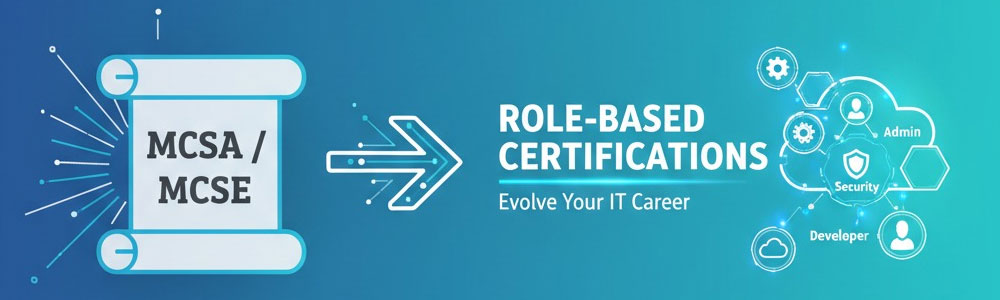
Transition from MCSA/MCSE to Role-Based Certifications
Over the past decade, Microsoft Certification has undergone a major shift. The earlier MCSA and MCSE were once the global IT industry’s gold standard, helping many professionals secure roles in network management and server maintenance. With the rise of cloud computing, Microsoft phased out traditional server certifications and introduced role-based certifications.
This shift focuses on practical skills for specific job roles rather than rote memorization of technology. For instance, the Azure Administrator Associate (AZ-104) certification tests real-world operational scenarios, requiring expertise in virtual machine deployment, storage management, identity authentication, and security policies. This makes Microsoft Certifications more practical and aligned with enterprise hiring needs.
Microsoft Ecosystem and the Strategic Importance of Certifications
The value of Microsoft Certification lies not only in the certificate itself but in the vast Microsoft ecosystem behind it. Microsoft’s strength lies in its “end-to-end solutions”:
- Enterprises use Windows Server + Azure for infrastructure deployment;
- Microsoft 365 for office collaboration;
- Dynamics 365 for business process management;
- Power BI/Power Platform for data visualization and automation.
This means that an individual with Microsoft Certifications can cover multiple critical areas of enterprise IT. As a result, Microsoft Certifications remain a key reference standard for many companies in hiring and promotion evaluations. With the integration of AI and Copilot, the value of Microsoft Certifications is expected to further increase in 2026.
Future Directions of Microsoft Certification
Expansion of AI and Automation Certifications
In the coming years, AI will be a key focus for Microsoft’s certification system. Microsoft has introduced AI-900 (Azure AI Fundamentals) as an entry-level certification, but by 2026, more advanced AI certifications are expected, focusing on large language models (LLMs), AI application development, and Copilot automation scenarios. These certifications will equip candidates with skills to deploy AI models on Azure and integrate AI into enterprise applications.
Strengthening Security and Compliance
Cybersecurity remains a critical IT challenge. Microsoft’s current security certifications, such as SC-200 (Security Operations Analyst), SC-300 (Identity and Access Administrator), and SC-400 (Information Protection Administrator), will increasingly emphasize zero-trust architecture, cloud-native security, and compliance. Future exams are likely to be more challenging, with a higher focus on hands-on labs, requiring cross-platform security skills.
Emergence of Industry-Specific Certifications
As digital transformation deepens, Microsoft may introduce certifications tailored to industries like finance, healthcare, and manufacturing. For example, certifications could cover healthcare compliance (HIPAA) or financial risk monitoring (Basel Accords). These will enhance the relevance of certifications, aligning them closely with specific industry needs.
Comparison of Microsoft certification with other brands
Microsoft vs. AWS Certifications
AWS holds the largest cloud market share, with a comprehensive certification system, particularly its highly recognized Solutions Architect and DevOps Engineer certifications. However, Microsoft’s strength lies in deep integration with enterprise IT.
Many traditional enterprises prefer Azure for cloud migration due to its seamless compatibility with existing Windows systems and Office 365. In short, AWS suits cloud-native developers, while Microsoft certifications are ideal for enterprise IT and hybrid cloud environments.
Microsoft vs. Google Cloud Certifications
Google Cloud excels in AI and data analytics, with tools like TensorFlow and BigQuery widely used in academia and AI research. However, its penetration in enterprise IT is far less than Microsoft’s.
Microsoft certifications are more practical and job-oriented, while Google Cloud is better suited for data scientists and AI engineers. If you aim for big data or AI research, Google Cloud is the better choice; for IT roles in multinational corporations or state-owned enterprises, Microsoft certifications offer greater value.
Microsoft vs. Cisco Certifications
Cisco remains a leader in networking and security, with certifications like CCNA, CCNP, and CCIE enjoying strong industry recognition.
However, Cisco lacks coverage in cloud computing and AI. Microsoft certifications have a clear edge in security and cloud, and they are more versatile, covering infrastructure, AI, data, and business applications.
Thus, Cisco certifications are ideal for network engineers, while Microsoft certifications suit full-stack IT roles.
Future exam difficulty and certification changes
Exam Update Frequency and Difficulty
Microsoft certifications are known for their frequent updates.
For example, the AZ-104 (Azure Administrator) certification is revised approximately every six months, requiring candidates to keep up with new technologies, resulting in a steep learning curve.
By 2026, this update frequency may accelerate, particularly for AI and security-related exam modules.
Hands-On Labs and Practical Focus
Future Microsoft certification exams will emphasize hands-on labs.
Candidates may need to complete tasks in virtual environments, such as configuring Azure virtual networks, deploying AI models, or implementing security policies.
This shift aligns exams with real-world scenarios but increases difficulty, posing a challenge for candidates without practical experience.
Certification Validity and Continuous Learning
Currently, Microsoft certifications are valid for one year, requiring an online renewal assessment to maintain validity.
In the future, Microsoft may introduce a dynamic update mechanism: if a skill or knowledge area becomes outdated, candidates must complete relevant courses to keep their certification valid.
This will enforce continuous learning, moving away from a “pass once, valid forever” model.
Microsoft Certification Salary and Employment Value
Skillsoft 2025 Salary Report
According to Skillsoft’s 2025 IT Skills and Salary Report, Microsoft certifications continue to offer high returns globally. For example:
- Azure Cosmos DB Developer Specialty: Average annual salary exceeds $178,000.
- Azure Data Engineer Associate: Average annual salary around $124,714.
- Azure Solutions Architect Expert: Salary range between $82,000–$145,000.
These figures show that Microsoft certifications not only enhance job opportunities but also significantly boost income. Notably, certifications in data, AI, and architecture are increasingly valuable, with AI and cloud security-focused certifications expected to be high-value in 2026, surpassing traditional administrator certifications.
Pearson VUE Survey Results
Pearson VUE’s latest Global Learning and Certification Report highlights:
- 60% of IT hiring managers prefer candidates with certifications.
- 28% of professionals reported higher salaries after earning a Microsoft certification.
- 70% of respondents believe certifications helped them secure new roles or promotions faster.
This demonstrates that Microsoft certifications are not just proof of learning but also key to employment and career advancement, often serving as a “ticket” to interviews in enterprise IT departments
Employment Advantage of Emerging Certifications like AI-900
With the rise of AI, certifications like AI-900 (Azure AI Fundamentals) are gaining prominence.
Research shows that candidates combining a bachelor’s degree with AI-900 significantly improve their skill match for machine learning roles.
By 2026, Microsoft is expected to introduce higher-level AI certifications, which will become highly sought-after in the job market.
Real Pain Points from Reddit Users
Microsoft certifications are highly valuable, but feedback from Reddit, particularly in r/AzureCertifications and r/ITCareerQuestions, highlights several real-world challenges.
Cost Issues
Many candidates complain about the high costs of Microsoft certifications:
- Exams typically range from $165 to $200.
- Additional costs for lab environments or official courses can double the expense.
- For newcomers, certification costs can be a significant financial burden.
One user remarked, “I spent $165 on AZ-104, plus extra for Azure lab access, which cost more than my monthly salary.” This reflects how certification costs will likely continue to challenge candidates.
Frequent Exam Updates
Microsoft certification exams are updated frequently, frustrating many users.
One user noted, “I bought study materials, but the exam syllabus changed before I could use them.” This forces candidates to repeatedly purchase new resources, increasing both study workload and financial strain.
Particularly in AI and security, updates occur almost quarterly, meaning candidates must continuously learn without a “pass and relax” option.
Balancing Certifications and Experience
Many Reddit users believe that while certifications are valuable, real-world experience matters more.
One user shared, “Interviewers value certifications, but they care more about my actual Azure deployment experience.” This suggests that certifications serve as a “foot in the door” but cannot fully replace hands-on project experience.
Future candidates will need to combine certifications with practical projects to succeed in the job market.
Industry Trends and Market Demand
Digital Transformation Drives Certification
According to IDC, by 2026, over 75% of large enterprises globally will fully adopt cloud architectures, with Azure being a key provider.
As enterprise digital transformation accelerates, demand for roles like Azure administrators, security analysts, and data engineers will continue to grow, directly boosting the market value of Microsoft certifications.
Cloud and AI Integration
Future job roles will require expertise in both cloud platforms and AI applications.
Microsoft is integrating tools like Copilot and AI Builder into Office 365, Dynamics 365, and Azure services.
Enterprises seek professionals who understand cloud architecture and can deploy AI solutions, so Microsoft certifications will increasingly focus on cross-domain integration.
For instance, a future Azure Solutions Architect may need to design cloud solutions and integrate AI models.
Demand for Cross-Domain Certifications
Future roles will emphasize “hybrid talent.” Examples include:
- Cloud Security Engineer: Requires both Azure security certifications (SC series) and foundational cloud certifications (AZ series).
- Data and AI Engineer: Likely needs AI-900 combined with DP-700 (Fabric Data Engineer Associate).
- Enterprise Architecture Consultant: Must have Azure Architect certification and familiarity with Power Platform and Dynamics.
The diversity of Microsoft’s certification system aligns well with these cross-domain needs, ensuring strong relevance in 2026.
Summary of Microsoft Certification Pros and Cons
Key Advantages
- High Market Recognition: Microsoft’s strong presence in enterprise IT makes its certifications highly valuable for employment.
- Comprehensive System: Offers a complete certification path from foundational to expert levels, covering cloud, AI, and more.
- Job-Oriented: Exams align closely with real-world work scenarios, with learning content directly applicable to projects.
- Cross-Domain Coverage: Spans IT infrastructure, AI, data, and business applications, ensuring broad applicability.
Potential Disadvantages
- High Costs: Exams, study materials, and lab environments result in significant cumulative expenses.
- Frequent Updates: Rapid changes to exam content and knowledge points create ongoing learning pressure.
- Practical Experience Still Essential: Certifications serve as a stepping stone, but project experience ultimately determines employment and promotion.
- Limited Relevance Outside Enterprise IT: In startups, open-source ecosystems, or AI research, Microsoft certifications are less valuable compared to AWS or Google Cloud.
How to choose the right Microsoft certification path for you
Entry-Level Certifications (Fundamentals)
Ideal for beginners and career switchers, such as:
- AZ-900 (Azure Fundamentals): Covers Azure infrastructure and cloud computing concepts.
- AI-900 (AI Fundamentals): For those new to AI, building foundational knowledge of AI applications.
- DP-900 (Data Fundamentals): For beginners aiming to enter the data field.
These certifications have relatively low costs and moderate difficulty, making them excellent starting points.
Mid-Level Certifications (Associate)
Suitable for professionals with some experience, such as:
- AZ-104 (Azure Administrator Associate): For cloud operations engineers.
- DP-700 (Fabric Data Engineer Associate): The latest data engineering certification, replacing the retired DP-203, based on the Microsoft Fabric platform, covering data pipelines, analytics, and optimization.
- SC-300 (Identity and Access Administrator Associate): A popular security certification focused on identity and access management.
Mid-level certification exams cost $165 per attempt. As exams involve significant hands-on tasks, candidates often need to prepare with Azure or Microsoft Fabric lab environments, which may incur additional expenses.
Expert-Level Certifications (Expert/Specialty)
Designed for senior professionals and architects, such as:
- AZ-305 (Azure Solutions Architect Expert): Essential for cloud architects.
- Cybersecurity Architect Expert: For advanced security specialists, emphasizing enterprise-grade security and zero-trust architecture.
- Cosmos DB Developer Specialty: Focused on database development and large-scale distributed data scenarios.
While exam costs are the same as mid-level certifications, the complex content and higher difficulty often lead candidates to invest in additional training courses, lab environments, and practice tests, resulting in higher overall costs. However, from a career and promotion perspective, expert-level certifications offer a high return on investment.
Microsoft Certification Study and Preparation Tips
Learning Resources and Platforms
Microsoft offers a wealth of learning resources, such as the Microsoft Learn platform, which covers official tutorials for all certifications. These tutorials are presented in modular courses and include an online lab environment (Sandbox) for hands-on practice.
Beginners should start with Microsoft Learn to build a solid foundation.
For those seeking structured preparation, courses on Pluralsight or Coursera provide practice exams and case studies aligned with real exam scenarios.
Candidates who have completed their learning and gained practical experience can use Leads4Pass practice questions for final exam preparation, helping to reinforce knowledge and familiarize themselves with question formats.
Lab Environment and Practical Experience
Microsoft certifications increasingly emphasize hands-on skills, so candidates should practice in real Azure environments or Microsoft 365 tenants.
Reddit users note that theoretical study alone struggles to address lab-based exam questions. Consider activating an Azure free subscription (offering a $200 credit) to gain experience by deploying virtual machines, configuring storage, or setting security policies.
This not only boosts exam pass rates but also provides practical experience for interviews.
Time and Budget Planning
Microsoft certifications require time and financial investment, varying by individual background:
- Entry-level certifications: Preparation takes about 2–4 weeks.
- Mid-level certifications: Preparation takes about 2–3 months.
- Expert-level certifications: Preparation takes 4–6 months or longer.
Exam fees are approximately $99–$165 per attempt, and with lab environments and study materials, total costs may reach $400–$700. Candidates should plan their time and budget in advance to ensure a smooth preparation process.
Career Outlook for the Next Five Years (2026–2030)
Cloud Security Roles
As enterprise digital transformation deepens, the demand for cybersecurity is surging.
Microsoft’s focus on zero-trust architecture and cloud-native security makes certifications like the SC series and Cybersecurity Architect Expert among the most sought-after credentials in the next five years.
Professionals with these certifications will be in high demand across industries like finance, healthcare, government, and energy, offering excellent salary prospects and job stability.
Data and AI Roles
The rise of AI is driving demand for data engineers, AI engineers, and machine learning specialists.
Certifications like DP-700 (Fabric Data Engineer Associate) and AI-900/advanced AI certifications will be essential for these roles.
By 2030, over 50% of enterprise IT positions are expected to require at least basic AI deployment and application skills, and Microsoft certifications provide a strong cross-domain career path to meet this need.
Enterprise Architecture and Consulting Roles
Beyond technical roles, Microsoft certifications are highly valuable for enterprise architects and technical consultants.
Future enterprises will need versatile professionals who can integrate cloud computing, AI, automation, and industry-specific solutions.
Candidates with Azure Solutions Architect Expert and Power Platform certifications will be highly competitive in consulting firms and large multinational corporations.
Is Microsoft Certification Worth a Long-Term Investment?
Suitable Candidates
- Those targeting enterprise IT roles: Whether aiming for cloud administrator, security analyst, or architect positions, Microsoft certifications are essential stepping stones.
- Professionals seeking careers in multinational corporations or state-owned enterprises: Microsoft’s ecosystem is deeply entrenched in large organizations, making certifications highly valuable.
- Individuals aspiring to enter data and AI fields: Microsoft’s certifications in AI and data analytics open new career opportunities.
Unsuitable Candidates
- Developers in startups: In small entrepreneurial teams, practical experience often outweighs certifications.
- Those focused on open-source or AI research: Certifications like AWS, Google Cloud, or Kubernetes may better align with their needs.
- Individuals not planning to work in the Microsoft ecosystem: If future career paths are unrelated to Azure or Microsoft 365, the return on investment for Microsoft certifications diminishes.
In summary, Microsoft certifications are ideal for enterprise IT, data, and security roles but have limited value for AI research or open-source ecosystem developers.
Pairing Suggestions with Other IT Certifications
Microsoft + AWS
This is the most common combination. Microsoft certifications cover enterprise IT and hybrid cloud, while AWS certifications address the globally dominant cloud platform.
This dual-certification combo significantly boosts employability for multi-cloud roles, ideal for cloud architects and DevOps engineers.
Microsoft + Cisco
Suitable for professionals in security and networking.
Cisco’s CCNP/CCIE focuses on core networking, while Microsoft’s SC series targets cloud and identity security. Together, they cover the full spectrum of capabilities from networking to cloud security.
Microsoft + Google Cloud
The best pairing for AI and big data roles.
Google Cloud’s BigQuery and TensorFlow lead in data and AI, while Microsoft certifications provide enterprise-grade implementation solutions. This combination is highly suitable for data scientists and AI engineers.
Conclusion and Future Recommendations
Value Assessment for 2026 and Beyond
Based on data, user feedback, and industry trends, Microsoft certifications remain a worthwhile investment in 2026. Their value in enterprise IT, cloud security, data, and AI fields is robust, particularly for those seeking jobs or advancement in medium-to-large enterprises.
Personal Development Strategy
Before pursuing certifications, clarify your goals:
- For enterprise IT roles, prioritize AZ-104 and SC-300.
- For data and AI fields, opt for DP-700 and AI-900.
- For enterprise consulting or architecture roles, consider AZ-305 and Power Platform certifications.
Long-Term Career Path Recommendations
Microsoft certifications should be viewed as a starting point, not an endpoint, for career development.
Future career competitiveness will depend not only on certifications but also on a combination of certifications, project experience, and continuous learning.
While Microsoft certifications can open professional doors, sustained success in 2026 and beyond hinges on your ability to apply learned skills effectively in enterprise settings.
Conclusion
In summary, Microsoft certifications remain a worthwhile career investment in 2026, particularly for enterprise IT, cloud security, and AI application roles, serving as key credentials for high-paying positions. However, they are not suitable for everyone; for open-source developers or startup teams, AWS or GCP certifications may offer greater value.
FAQs
What are the future trends for Microsoft certifications?
AI, security, and industry-specific certifications will be key focus areas, with exams increasingly emphasizing hands-on labs and practical skills.
How much do Microsoft certifications cost?
Typically between $99–$165 per exam. Including lab environments and study materials, total costs may reach $400–700.
How often do Microsoft certifications need to be renewed?
Currently, certifications require renewal every year through an online assessment. In the future, more stringent dynamic update mechanisms may be introduced.
Which is more valuable: Microsoft or AWS certifications?
Microsoft certifications are better suited for enterprise IT or hybrid cloud roles, while AWS certifications are more competitive for cloud-native and developer positions.
Are Microsoft certifications useful for someone without experience?
Certifications can help secure interviews, but lacking practical experience may put you at a disadvantage. It’s recommended to gain project experience alongside certifications.

![[Update 2025] Leads4Pass AZ-204 Exam materials: Pass Azure Developer Associate Certification Exam](https://examdumpsbase.com/wp-content/uploads/2024/10/az-204-dumps.jpg)