Leads4pass
2025 Microsoft DP-420 exam prep roadmap and Q&As
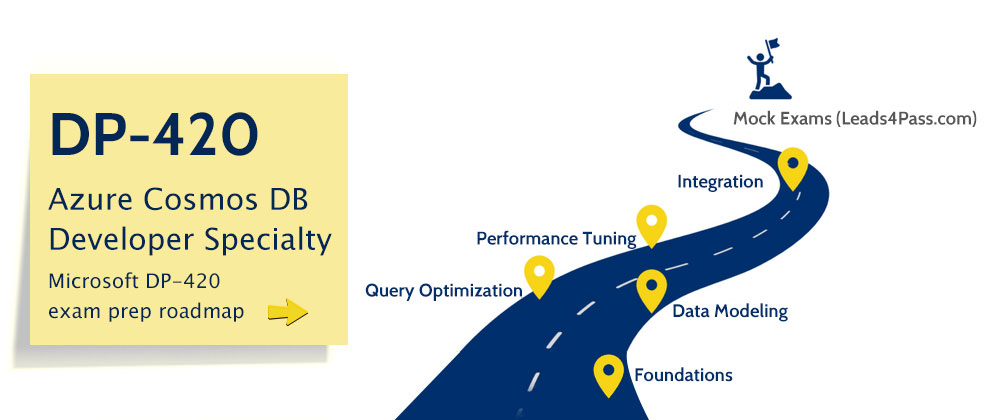
Here’s my carefully crafted DP-420 exam preparation guide, which I’ve been working on for days.
Whether you’re a cloud developer aiming to master Azure Cosmos DB or an enthusiast looking to boost your resume with a certification, this guide is perfect for you.
And I’ve also prepared a gift for everyone!
In the second half of the article, you’ll find a free set of DP-420 exam practice questions—158 in total, reviewed and edited by the Leads4Pass Microsoft certification team, with 15 of them shared online for free.
Next, I’ll provide you with a customized step-by-step roadmap for 2025, sample Q&As, and insider tips to help you pass the exam with confidence.
What is the DP-420 Exam?
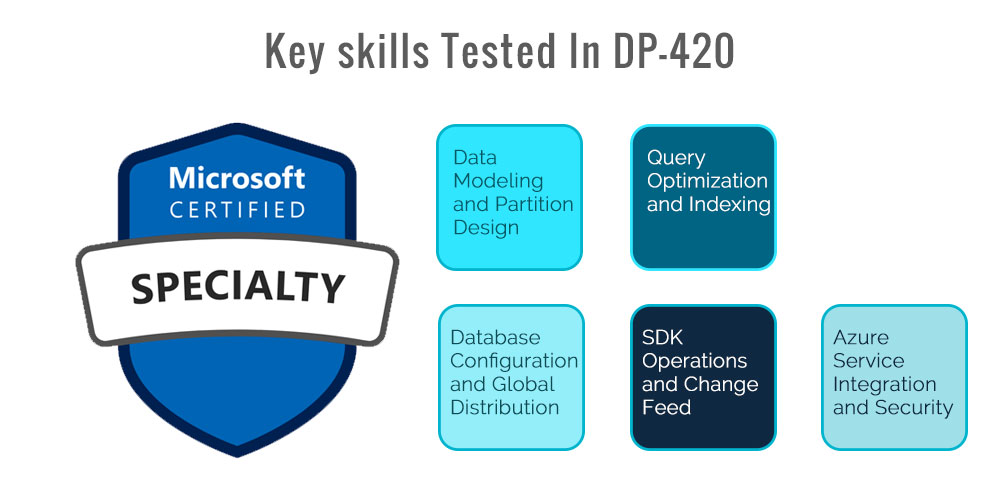
The DP-420 is Microsoft’s certification for developers who design and implement solutions with Azure Cosmos DB, a globally distributed NoSQL database. It tests skills like data modeling, partitioning, query optimization, and integration with Azure services. According to Microsoft’s official exam page, it’s ideal for those with intermediate Azure experience. But why does it matter in 2025? With cloud adoption soaring, Cosmos DB skills are in high demand—Gartner predicts NoSQL databases will dominate enterprise solutionsby 2026.
» Read more about: 2025 Microsoft DP-420 exam prep roadmap and Q&As »
Alibaba’s QwQ-32B: How a Small Model Challenges DeepSeek-R1’s Compute Dominance
In the relentless race of artificial intelligence, the battle between model size and performance rages on. On March 5, 2025, Alibaba’s Qwen team unveiled QwQ-32B, an open-source model with just 32 billion parameters that claims to rival DeepSeek-R1 (671 billion parameters) in math reasoning, code generation, and general problem-solving. This breakthrough underscores the power of reinforcement learning (RL) and opens new doors for enterprises seeking efficient AI solutions. Let’s dive into this “small but mighty” model and explore how it holds its own against a giant with far less computational heft.
The Rise of the Underdog: QwQ-32B’s Key Strengths
QwQ-32B operates with a mere fraction—1/20th—of DeepSeek-R1’s parameters yet delivers comparable results on critical benchmarks. According to Alibaba’s blog post (see Qwen announcement: https://qwenlm.github.io/blog/qwq-32b), this feat stems from a multi-stage reinforcement learning approach, leveraging structured self-questioning to boost math and coding prowess. By contrast, DeepSeek-R1 relies on its massive 671-billion-parameter scale and Mixture-of-Experts (MoE) architecture, activating 37 billion parameters per inference (per DeepSeek paper: https://arxiv.org/abs/2501.11234), demanding over 1,500GB of GPU memory (16 Nvidia A100s). QwQ-32B, however, runs on just 24GB, making it deployable on consumer-grade GPUs like the Nvidia RTX 4090. For enterprises, this translatesto top-tier AI performance without breaking the bank on hardware.
» Read more about: Alibaba’s QwQ-32B: How a Small Model Challenges DeepSeek-R1’s Compute Dominance »